The UAE has some of the strongest sunshine in the world, and a solar water heater turns it into hot water for showers, kitchens and laundry with very little electricity. For most villas, a well-chosen system covers the bulk of daily hot water demand for much of the year, with an electric backup element for the rest.
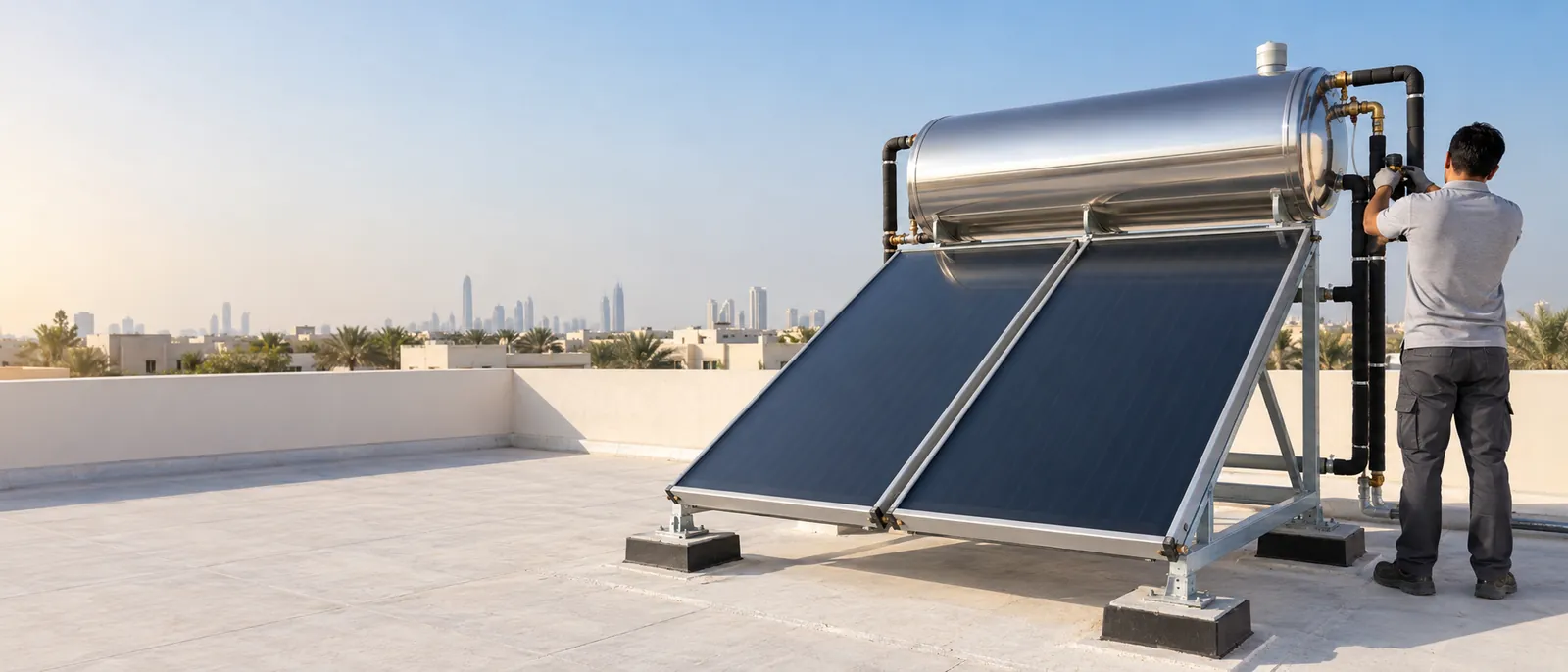
We supply, install, repair and maintain solar water heaters for villas, residential buildings and commercial properties in all seven emirates, working with Ariston, Zenith and Sundware systems. This page explains how the systems work and how to choose one, so the conversation about your property starts from the right place.
How a solar water heater works
A solar water heater is a solar *thermal* system, which is different from the photovoltaic (PV) panels that generate electricity. Instead of making power, it heats water directly. If you are unsure which you need, our guide to solar thermal versus PV water heating sets out the differences.
Every system has three main parts:
- Collectors on the roof absorb sunlight and transfer the heat to water or a heat-transfer fluid.
- An insulated storage tank holds the heated water until you need it.
- An electric backup element with a thermostat tops up the temperature on overcast days, in cooler winter weeks, or when the household uses more hot water than the sun has provided.
Safety components complete the system: a pressure and temperature relief valve to protect the tank, and ideally a thermostatic mixing valve so water at the taps stays at a safe temperature even when the tank is very hot in summer.
Is solar water heating right for your property?
Solar water heating works best where there is a suitable roof and a steady daily demand for hot water. Villas and townhouses are the natural fit. Residential buildings, hotels, staff accommodation and other properties with large, predictable hot water use can also benefit, though the design is more involved.
Water heating is usually the second-biggest electricity cost after cooling. Our guide to cutting your electricity bill in the UAE shows where solar fits alongside other savings.
Before choosing a system, it helps to know:
- Roof space and orientation. Collectors need an unshaded position, ideally facing south. Water tanks, parapets and neighbouring buildings can all cast shade.
- Roof structure. A full tank is heavy. Thermosyphon systems put that weight on the roof, so the structure and waterproofing need checking.
- How many people use hot water, and when — a family that showers in the evening has different needs from one that showers early.
- Your existing plumbing, including where the hot water lines run and whether there is an existing electric heater to replace.
If a property is not a good candidate, we will say so rather than sell a system that will underperform.
Types of solar water heating systems

Thermosyphon systems
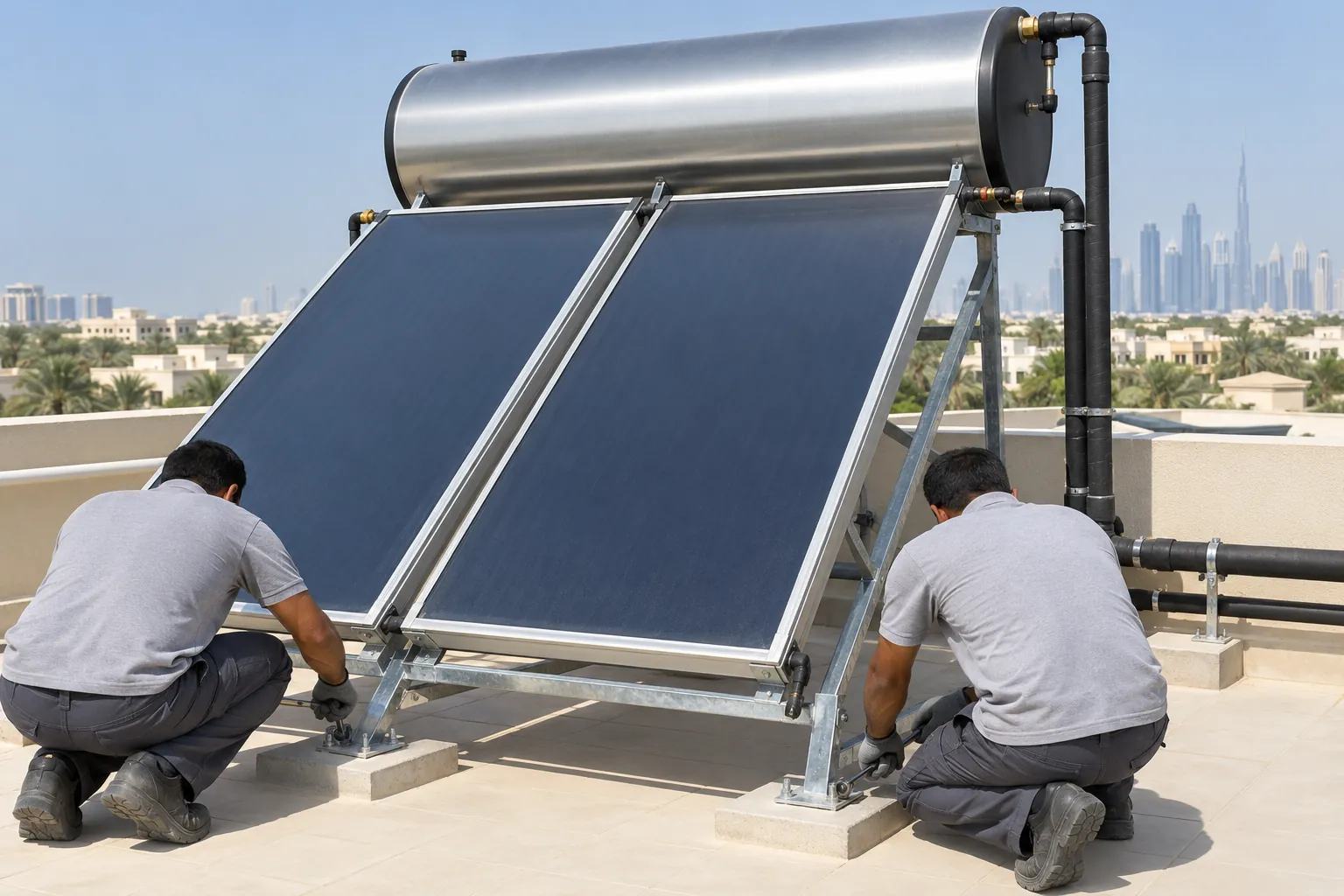
In a thermosyphon system the tank sits above the collectors on the roof. Heated water rises naturally into the tank and cooler water sinks back to the collectors, with no pump or controller. This makes them simple, reliable and inexpensive to run. They are the most common choice for UAE villas. The trade-off is a visible tank on the roof and the extra roof load.

Forced circulation systems
Here the tank sits elsewhere, often in a plant room or utility area, and a small circulation pump moves fluid between the collectors and the tank, switched by a controller with temperature sensors. Forced systems suit properties where a rooftop tank is not wanted or not possible, and larger installations. They have more components, so they need a little more maintenance.
Flat-plate and evacuated tube collectors
Flat-plate collectors are robust glazed panels and the usual choice in hot climates. Evacuated tube collectors use rows of glass tubes with a vacuum layer that cuts heat loss. They perform well in cooler conditions, but in peak UAE summer they can produce more heat than a household uses, so system sizing and temperature control matter.
Choosing the tank size
Tank size is the decision that most affects comfort. As a starting point, many designers allow roughly 40 to 60 litres of hot water per person per day, then adjust for bathrooms, bath tubs, rainfall showers, kitchen use and laundry.
Common domestic tanks range from about 150 to 300 litres for a typical family villa, with larger or multiple tanks for big households. Too small a tank means the backup element works hard every evening. Too large a tank costs more and may never fully heat in winter.
Tank construction also matters. Enamelled (glass-lined) steel tanks use a sacrificial magnesium anode to protect against corrosion, which needs checking periodically. Stainless steel tanks resist corrosion differently and suit some water conditions better. We will recommend the size and type for your household and water supply.
Brands we supply and service
We supply, install and repair systems from three brands:
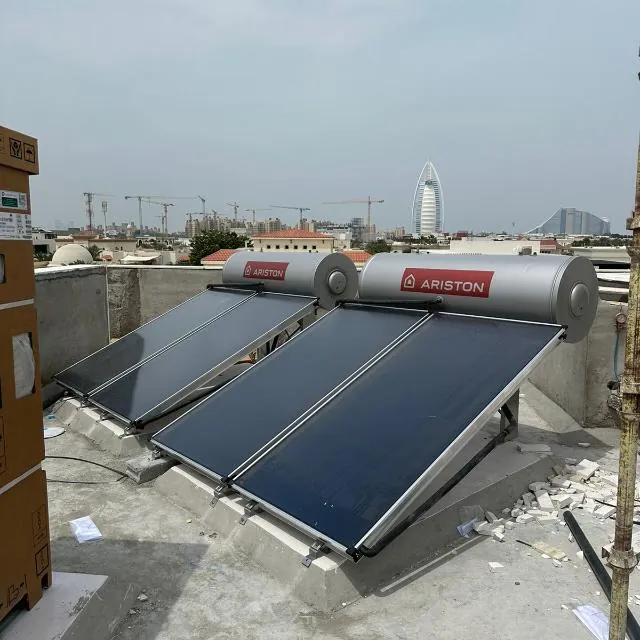
- Ariston — an established international water heating brand whose solar range includes thermosyphon systems for domestic use.
- Zenith — water heaters manufactured in the UAE, with solar systems from domestic to large commercial capacities.
- Sundware — thermosyphon solar water heaters and matching tanks and heating elements.
If you already have one of these systems, we can service it and source replacement parts. We keep commonly needed parts for Ariston, Zenith and Sundware in stock, so most repairs do not wait for parts. Availability can depend on the model. If you have a different brand, send us a photo of the tank label and we will tell you honestly whether we can help.
From enquiry to hot water
- Tell us about the property — emirate, property type, number of occupants and roof photos.
- Site survey — we check roof position, shading, structure access and the existing plumbing. Surveys are free within Dubai. Outside Dubai, the AED 250 site-visit charge applies and is deducted from the job if you go ahead.
- Recommendation and written quote — system type, collector and tank size, brand options, and what the installation includes.
- Installation — covered in detail on our solar water heater installation page.
- Handover — we explain the backup element, thermostat setting and what to check over time. Our work carries a 1-month workmanship warranty, and new parts carry the manufacturer’s warranty, subject to the manufacturer’s terms. Where applicable, we register the manufacturer’s warranty for you after installation.
What affects the price
We quote each system individually. The main factors are:
- system type (thermosyphon or forced circulation)
- tank capacity and number of collectors
- brand and tank material
- roof access, height and mounting requirements
- the length and condition of the pipe runs to the bathrooms and kitchen
- removal of an existing heater or old solar system
- any building or community approvals required
Ask for an itemised quote so you can see exactly what you are paying for.
Supply and service across the UAE
We supply and install solar water heaters in Dubai, Abu Dhabi, Sharjah, Ajman, Ras Al Khaimah, Fujairah and Umm Al Quwain. Our office is in Al Khabaisi, Dubai. Visits within Dubai are free; outside Dubai a AED 250 site-visit charge applies, which is fully deducted from the service cost if you go ahead. All visits are scheduled in advance.
In Dubai, Dubai Municipality has encouraged solar water heating in new villas and other building types since its 2011 circular on solar water heating systems, which also sets expectations for design calculations at the permit stage. Requirements for new buildings are set by the current building regulations, so if you are building or extending, check the latest rules with your consultant. We can provide product information your consultant may request.
Why choose Coolflow Technical for solar water heaters
- One team across all seven emiratesSupply, installation, repair and maintenance from our office in Al Khabaisi, Dubai, for homes and businesses across the UAE.
- Diagnosis before any quoteWe find the actual cause first and confirm the price with you before work starts.
- Free site visits in DubaiOutside Dubai, a AED 250 visit charge applies and is deducted from the job if you go ahead.
- Warranty on our workA 1-month workmanship warranty, plus the manufacturer’s warranty on new parts.
- Original parts where availableWe use original manufacturer parts wherever available and trusted, high-quality parts where appropriate.
- 24/7 support on contractCustomers with an annual maintenance contract get 24/7 emergency support.
Our completed solar water heater projects
Photos from solar water heating systems we have supplied, installed and serviced across the UAE. Tap any photo to view it full size.
 Ariston flat-plate solar water heaters on a Dubai rooftop.
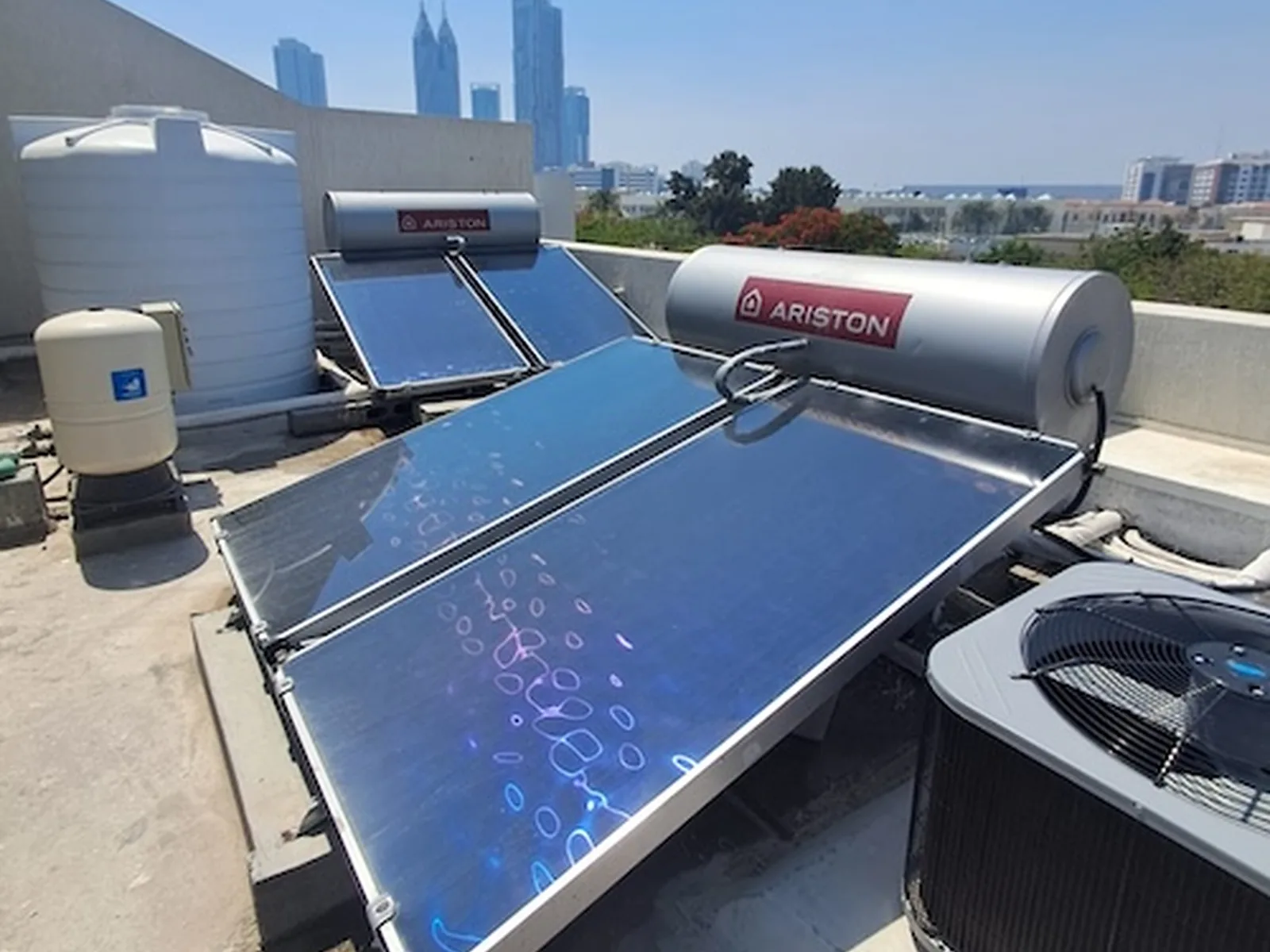 Solar water heaters on a Dubai villa roof.
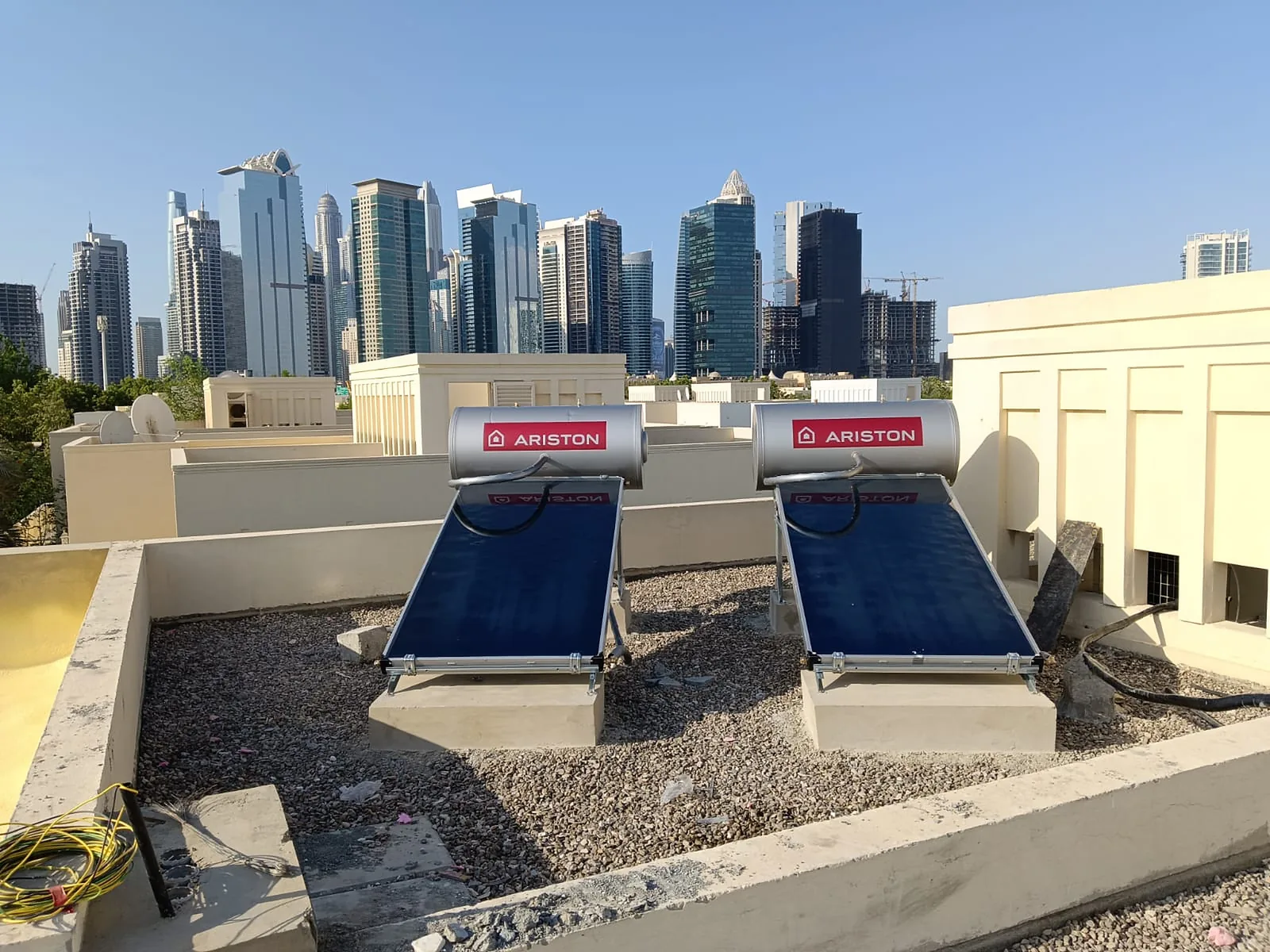
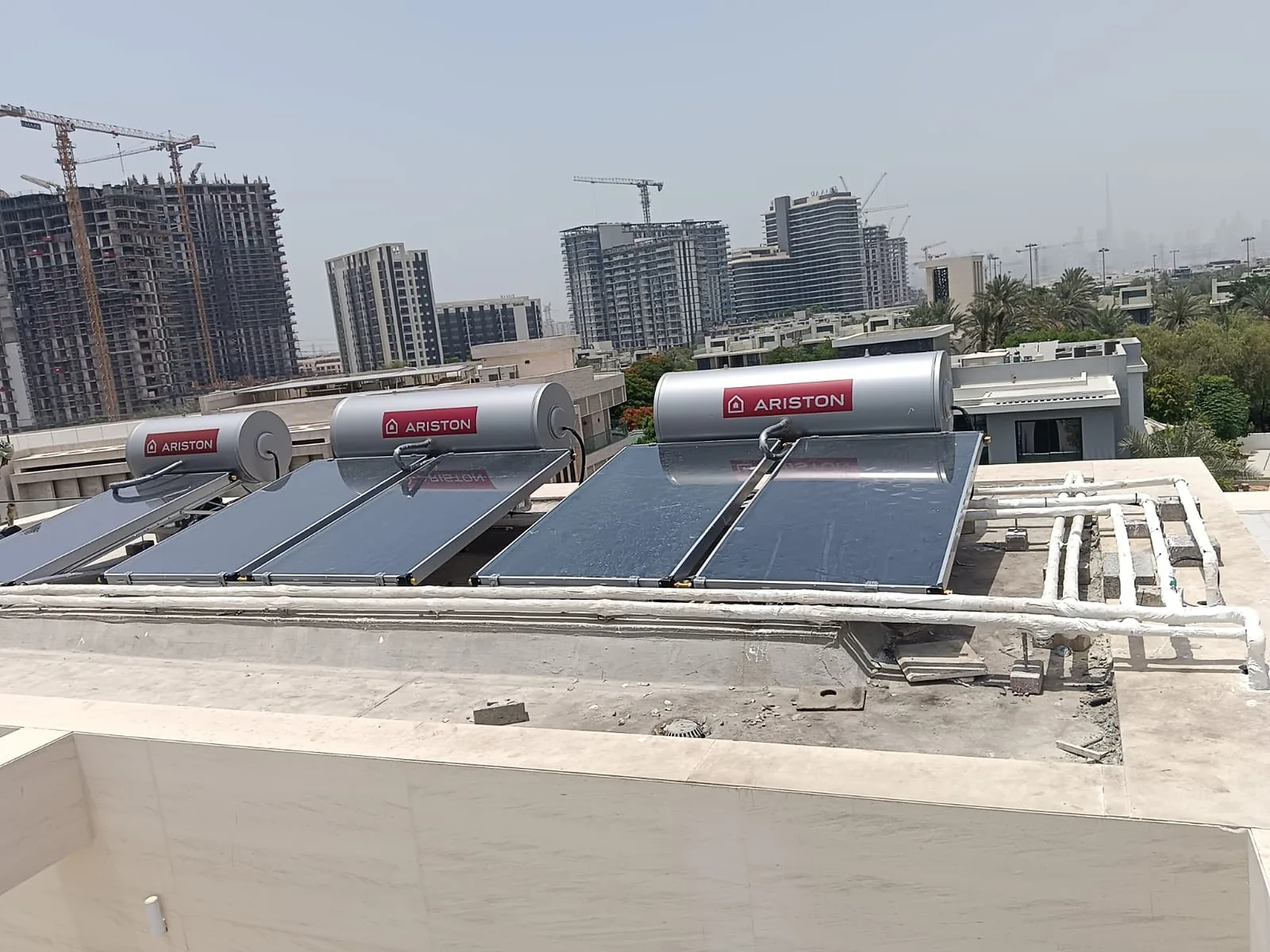 Ariston thermosyphon systems installed side by side on a flat roof.
 Sundware thermosyphon system on a villa roof.
 Tank and collector frame being fitted on the roof.
 Ariston solar water heater with twin collectors.
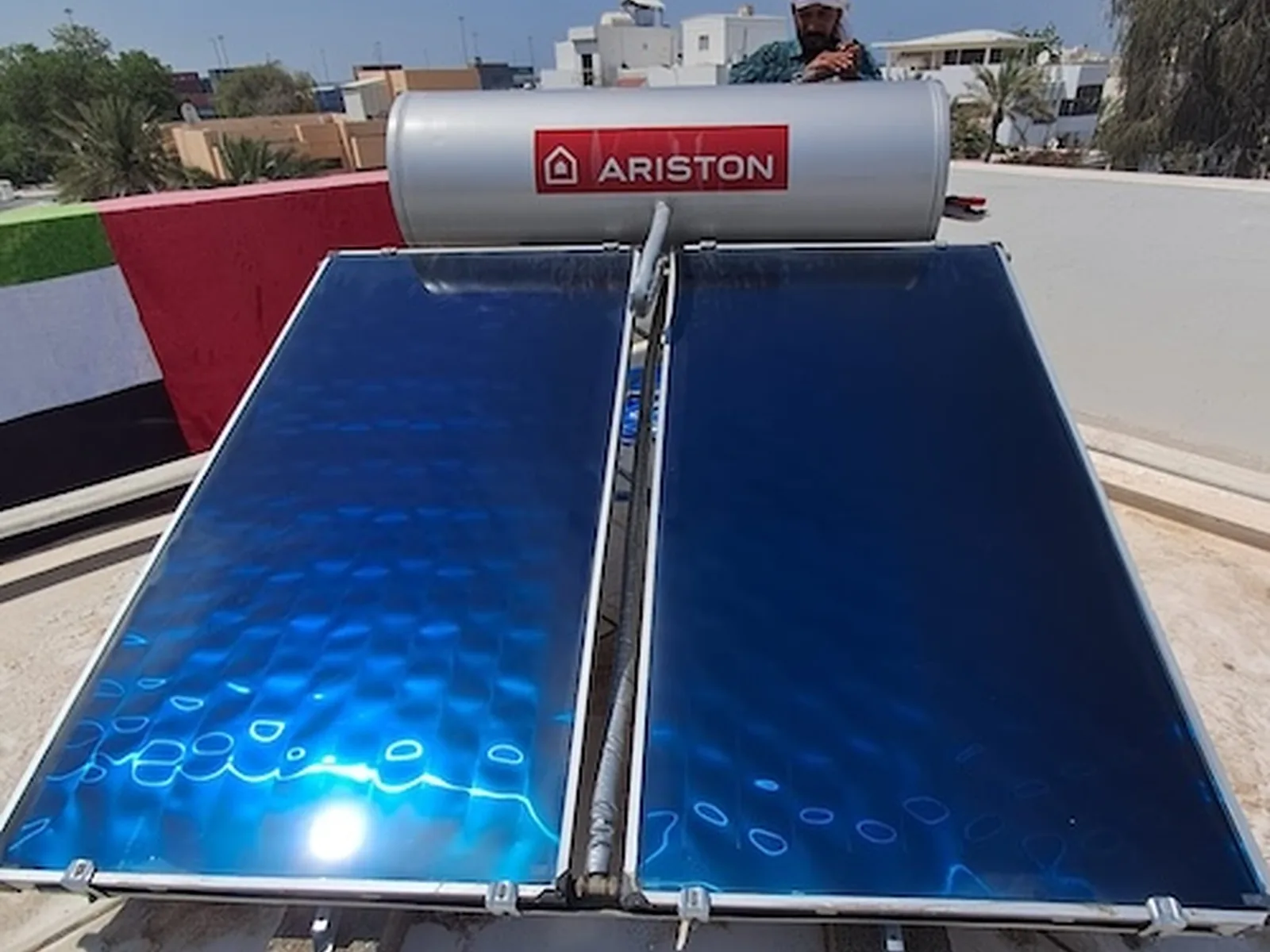 Ariston twin-collector system on a flat roof.
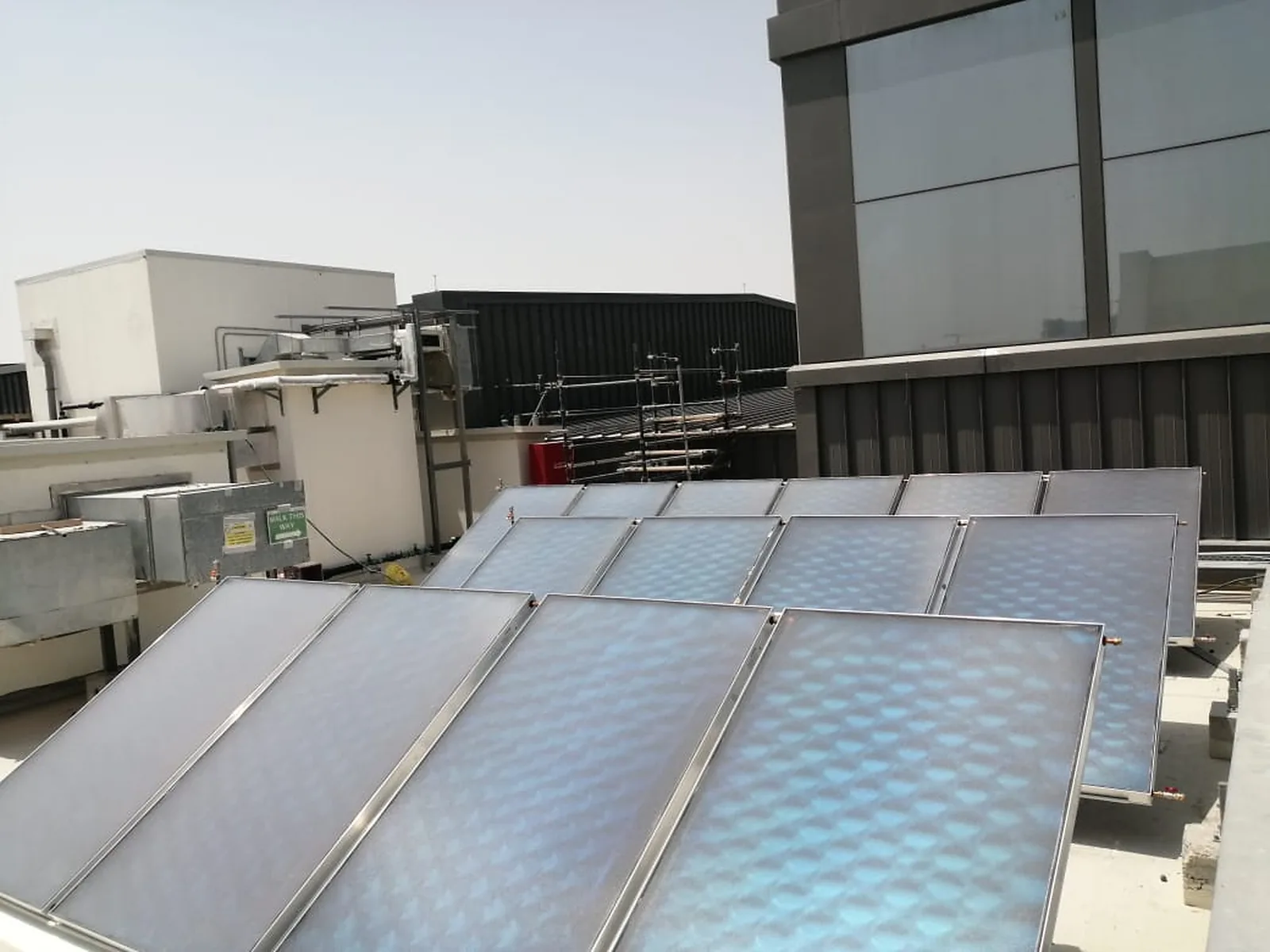 A commercial collector array that is serviced on a schedule.
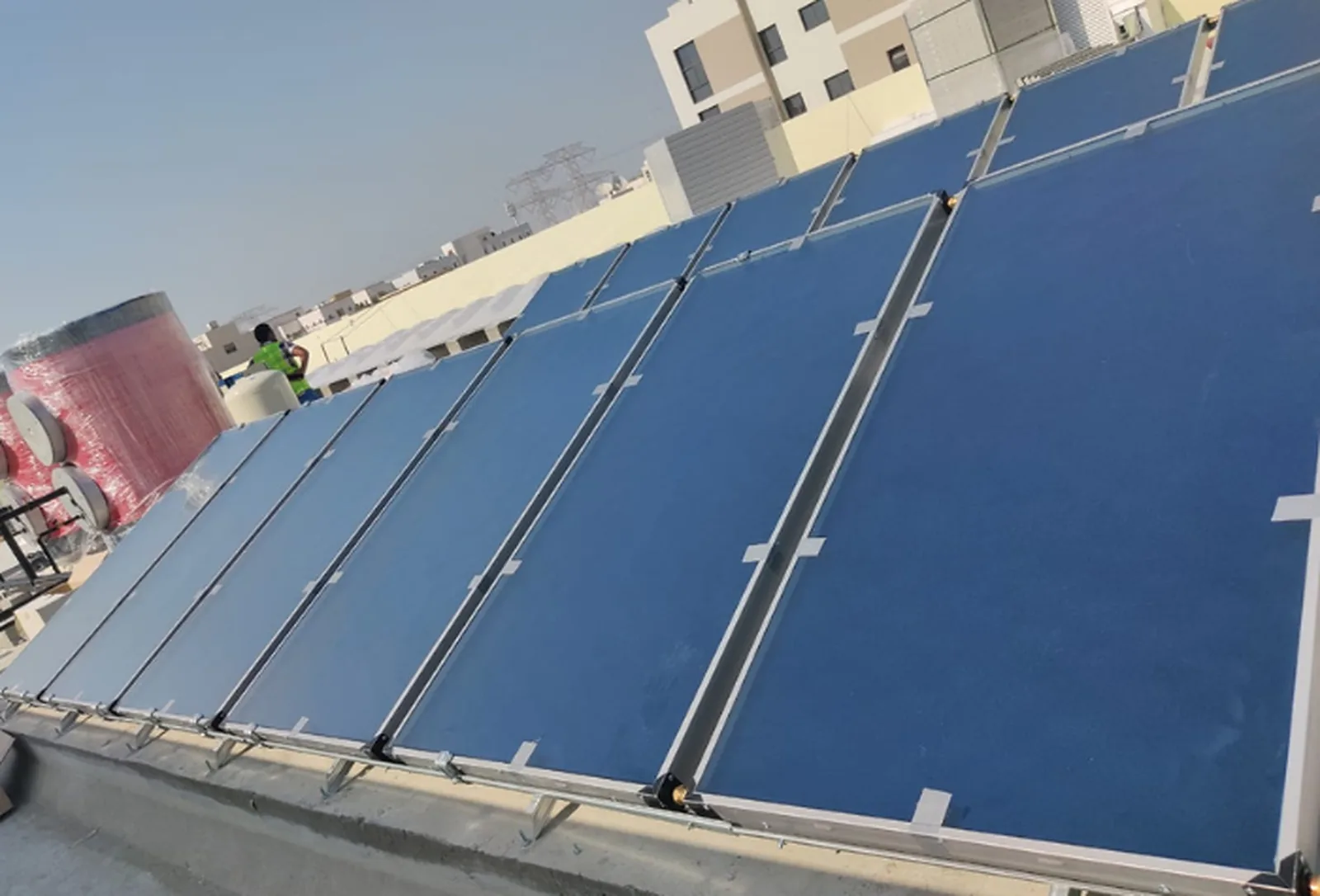 Collector array on a residential building.
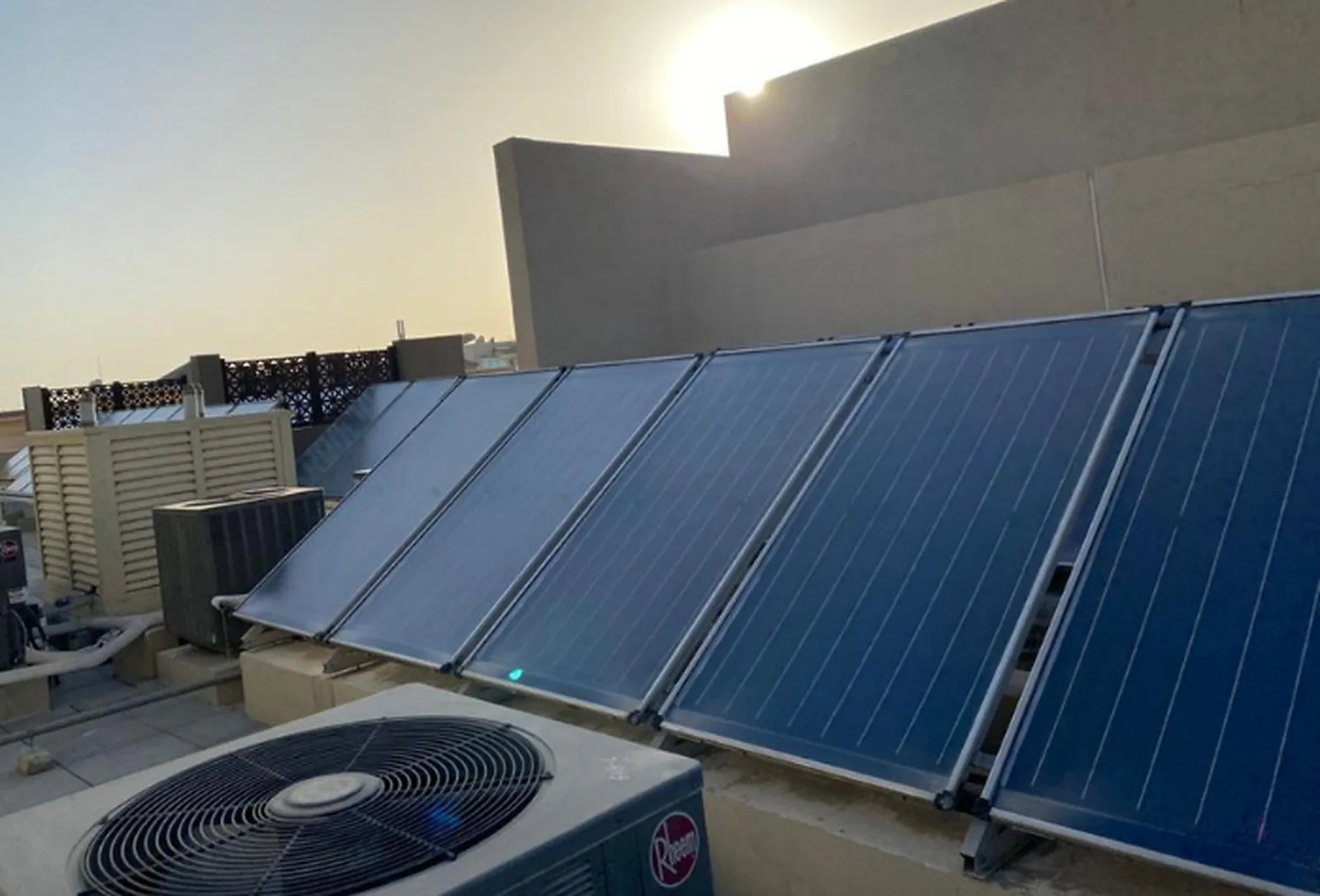 Flat-plate collector array on a rooftop.
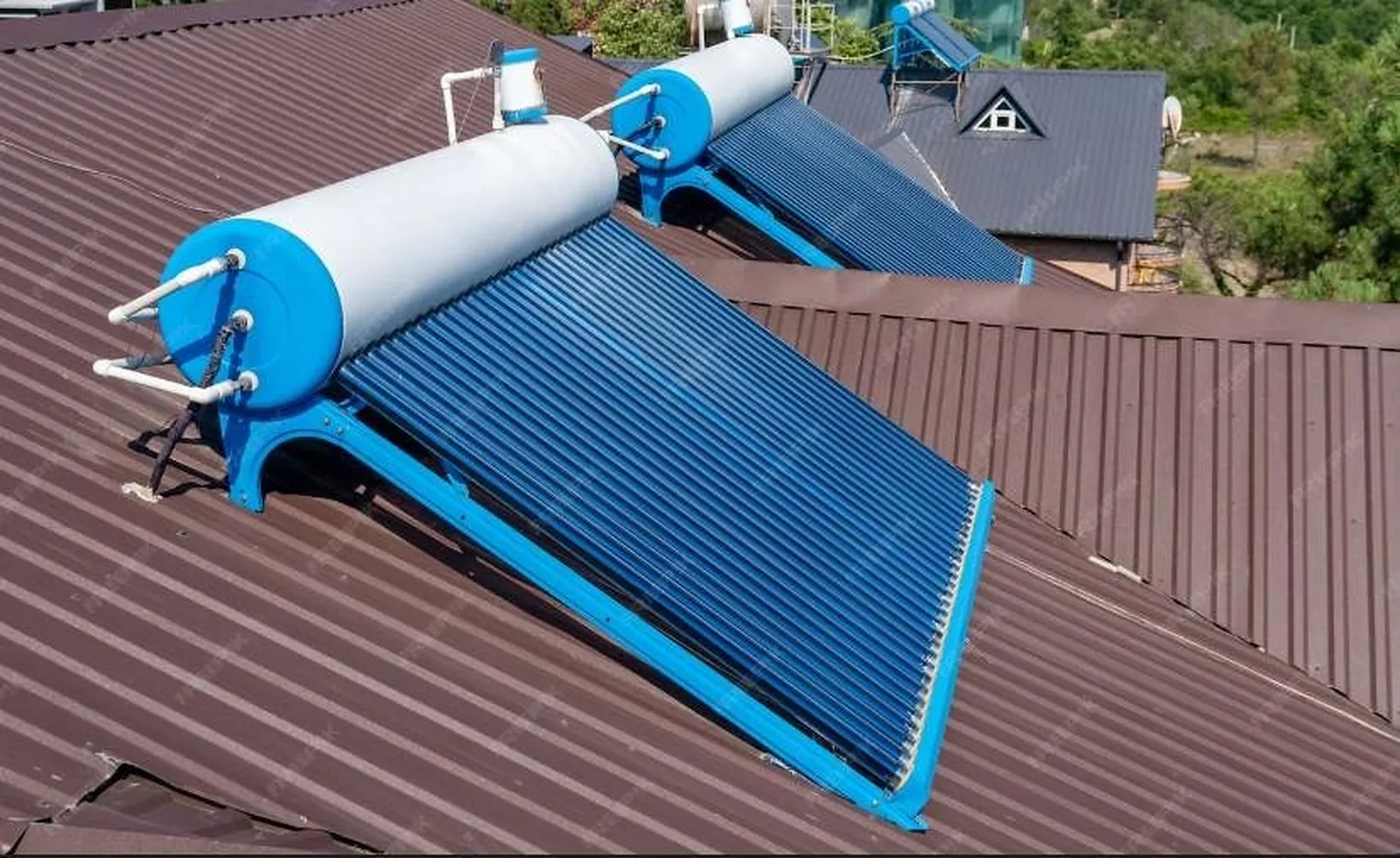 Evacuated tube systems on a pitched roof.
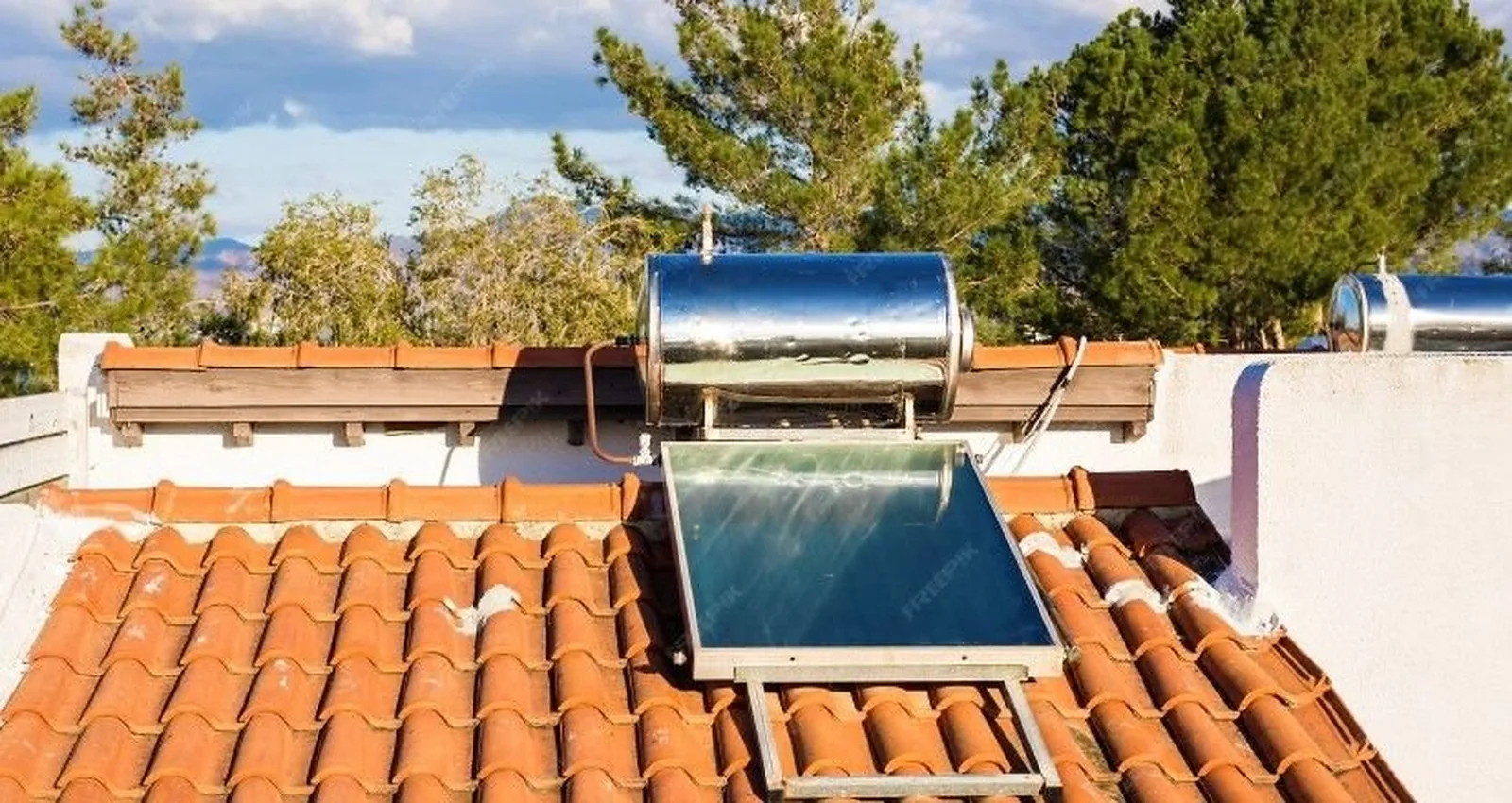 A flat-plate solar thermal system on a villa roof.
Request a quote for a solar water heater
Tell us what you need and send photos on WhatsApp if you can. Site visits within Dubai are free, and every price is confirmed before work starts.
Frequently asked questions
Will a solar water heater work in winter?
Yes. UAE winters are still sunny. On cooler or cloudy days the water may not reach full temperature from solar alone, and the electric backup element tops it up automatically.
Can the water get too hot in summer?
It can. Tank temperatures can climb high in July and August. A thermostatic mixing valve keeps tap temperature safe, and correct sizing avoids excessive overheating.
Thermosyphon or forced circulation — which should I choose?
For most villas with a suitable flat roof, thermosyphon is simpler and cheaper to run. Forced circulation is better when the tank cannot go on the roof or for larger systems.
Can I replace my electric water heater with a solar one?
Usually, yes. The solar tank connects into your hot water pipework, and the old heater is removed or kept as an additional backup depending on the layout.
How long do solar water heaters last?
Lifespan depends on water quality, tank type and maintenance. Regular maintenance — checking the anode, valves and collectors — is the biggest factor you can control.
Does hard water affect a solar heater?
Scale builds up on heating elements and inside tanks where water is hard. If your supply leaves scale on taps and showers, a water softener can protect the system.
Related services
If your existing system has stopped heating, see solar water heater repair. For new systems, installation explains the job in detail. To keep a system efficient, book solar water heater maintenance or include it in an annual maintenance contract.
Tell us your emirate, the number of people in the home and send a photo of the roof, and we will recommend a system.