Water pumps tend to be out of sight until they stop. Then the roof tank runs dry, showers lose pressure, or the pump room fills with the sound of a motor short cycling. Most of those failures start as small, measurable changes: a seal beginning to weep, a pressure vessel losing its air charge, a bearing getting noisy, or a motor drawing more current than it should. Regular maintenance finds them early.
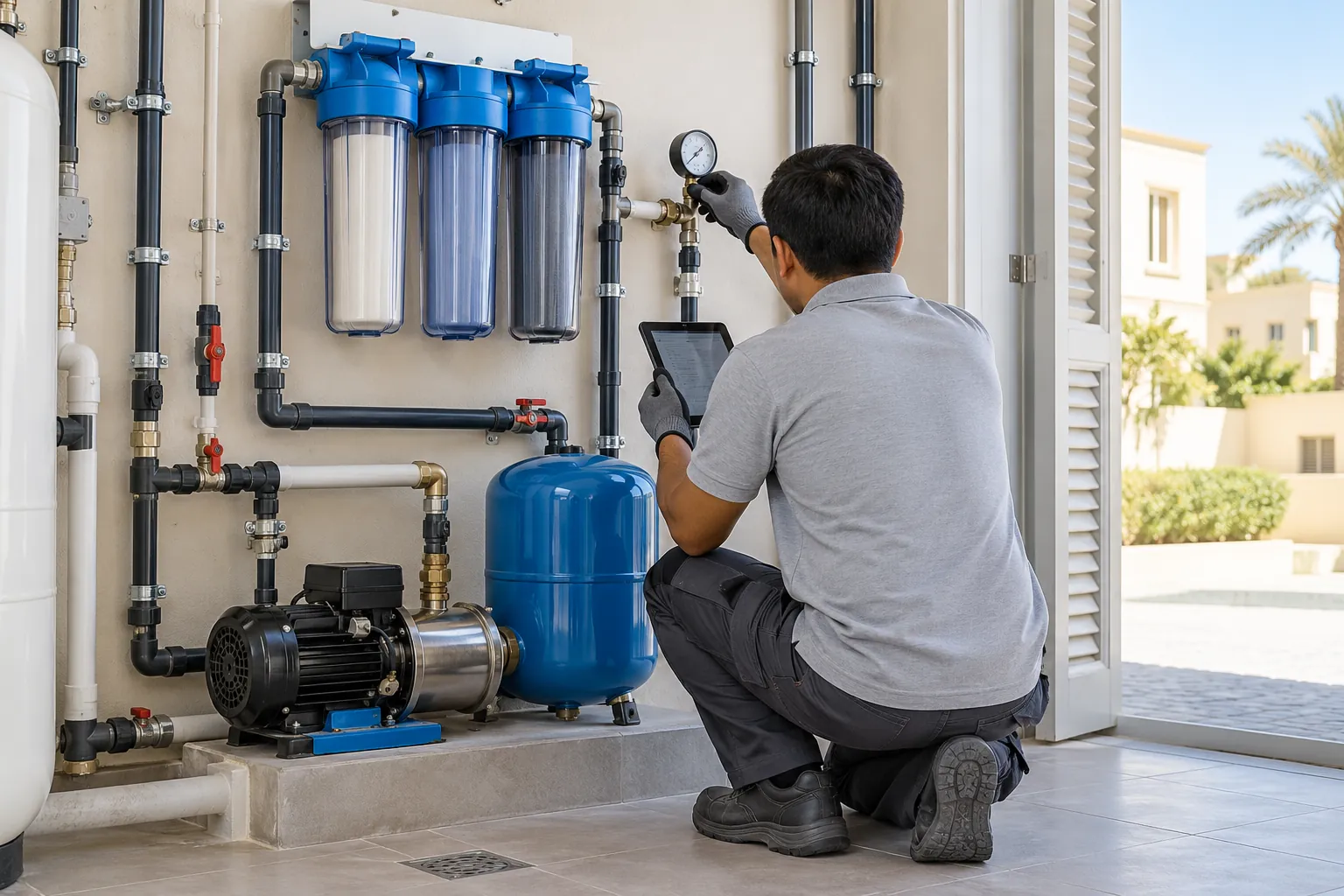
We maintain transfer, booster, submersible and circulation pumps for villas, residential buildings and commercial properties in all seven emirates.
Why water pumps need regular maintenance
Pumps in UAE buildings work under conditions that speed up wear:
- Heat. Pump rooms and outdoor enclosures get very hot in summer, which shortens motor life and can trip overload protection.
- Demand peaks. Water use rises in hot weather, so pumps run and start more often.
- Sediment. Sand and silt from storage tanks wear impellers and seals and block strainers.
- Cycling. A pressure vessel that has lost its charge makes a booster start and stop constantly, wearing the motor, the pressure switch and the contactor.
Because many villas and buildings depend entirely on their pumps for water, a failure is disruptive. Scheduled checks are far cheaper than an emergency repair, and much less inconvenient.
What a pump service includes

Mechanical checks
- Inspect the mechanical seal for weeping or leaks
- Listen for bearing noise and check for vibration
- Check pump and motor mounting, anti-vibration pads and coupling, where fitted
- Clean inlet strainers and check suction pipework for air leaks

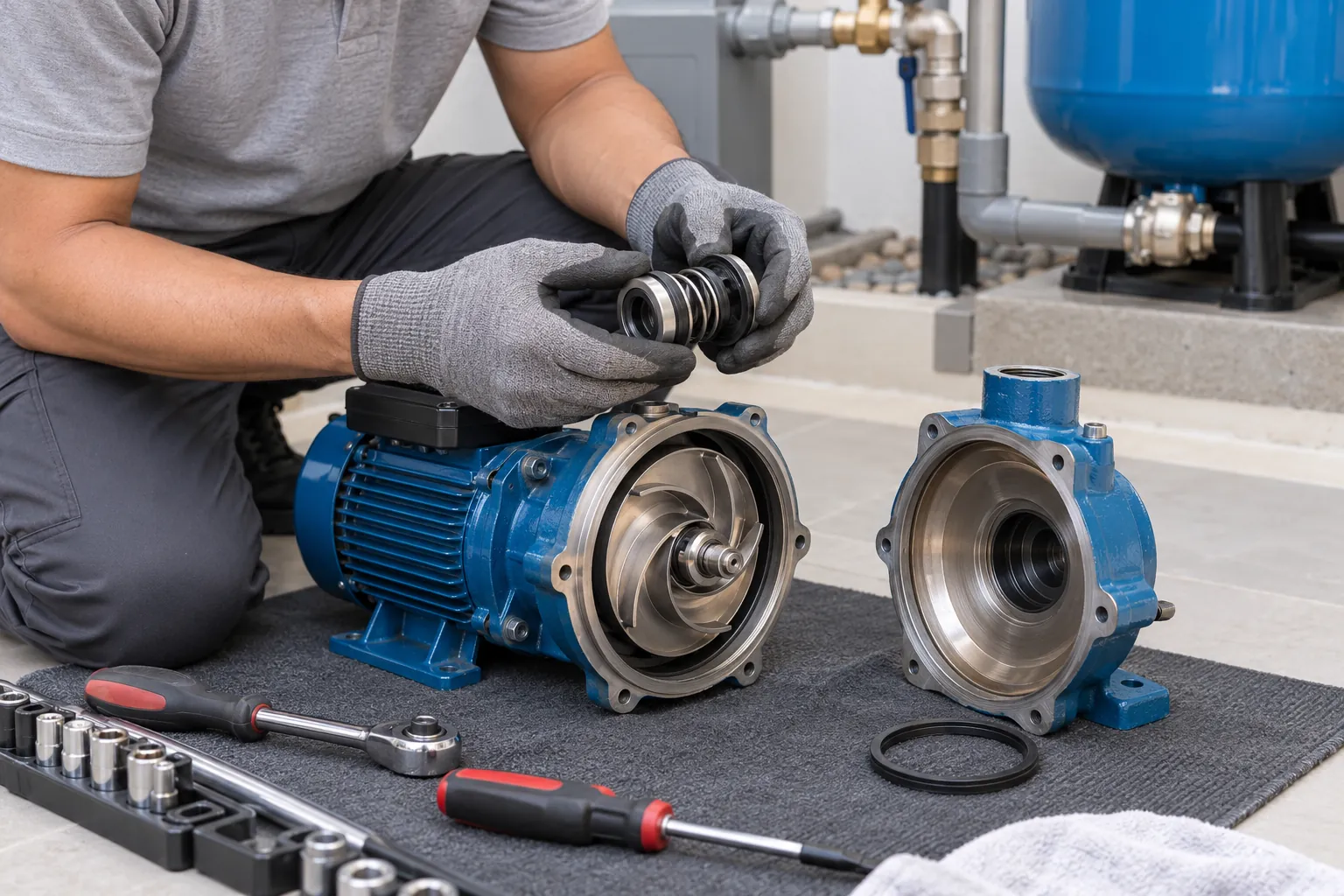
Pressure and hydraulic checks
- Record cut-in and cut-out pressures and compare with the design settings
- Check the pressure vessel’s air pre-charge with the vessel isolated and drained, and adjust it
- Check for diaphragm failure (water at the air valve)
- Confirm non-return and isolation valves operate correctly
Electrical checks
- Measure motor running current and compare with the nameplate
- Test motor insulation where appropriate
- Inspect the capacitor (single-phase pumps), contactors, overloads and terminals
- Check the earth connection
Controls
- Test float switches and level sensors in both tanks
- Test dry-run protection
- Check variable-speed drive settings, alarms and cooling fans
- Confirm duty rotation and standby changeover on multi-pump sets
Pump room and tanks
- Check ventilation and temperature in the pump room or enclosure
- Look for leaks, corrosion and water on the floor
- Note tank condition and sediment levels, and advise if cleaning is due
After the service, you receive a summary with readings and any recommended repairs. Repairs outside the service are quoted before any work.
How often pumps should be serviced
As a general guide:
- Villa transfer and booster pumps: at least once a year, ideally before summer
- Heavily used villa systems and those with a history of faults: every six months
- Building booster sets and commercial systems: commonly quarterly, depending on the system’s size and how critical it is
Manufacturer recommendations and the system’s condition may justify a different interval. After the first service, we suggest a schedule based on what we find.
Signs a pump needs attention now
- The pump starts and stops every few seconds
- Pressure is lower than usual or fluctuates
- The pump runs when no water is being used
- Water is leaking from the pump body
- Grinding, rattling or a high-pitched whine
- The breaker or overload trips
- The roof tank empties or overflows
These signs usually mean a fault has already developed. Book a water pump repair visit rather than waiting for the next scheduled service.
Maintaining building pump sets
Residential buildings, offices and commercial properties often depend on multi-pump booster sets, transfer pumps and drainage pumps in central pump rooms. Here, maintenance usually includes duty rotation checks, standby changeover tests, alarm testing, and keeping a log of pressures and running hours so trends are visible before they become failures.
For facility managers, we can maintain pump systems to a set schedule with written records, either on their own or as part of a wider maintenance contract.
What you can check yourself
- Listen to the pump occasionally: note new noises or more frequent starts
- Look for water around the pump and under the pressure vessel
- Keep the pump area clear, ventilated and shaded
- Watch the roof tank level if you can see it
- Note the pressure gauge reading when the system is working well, so you can spot changes
Leave electrical checks, vessel pre-charge and seal work to a technician.
One-off or contract?
A yearly pump service suits most villas. If you would like pumps serviced on schedule along with your AC, plumbing and filtration, an annual maintenance contract keeps every visit on track.
What affects the cost and where we work
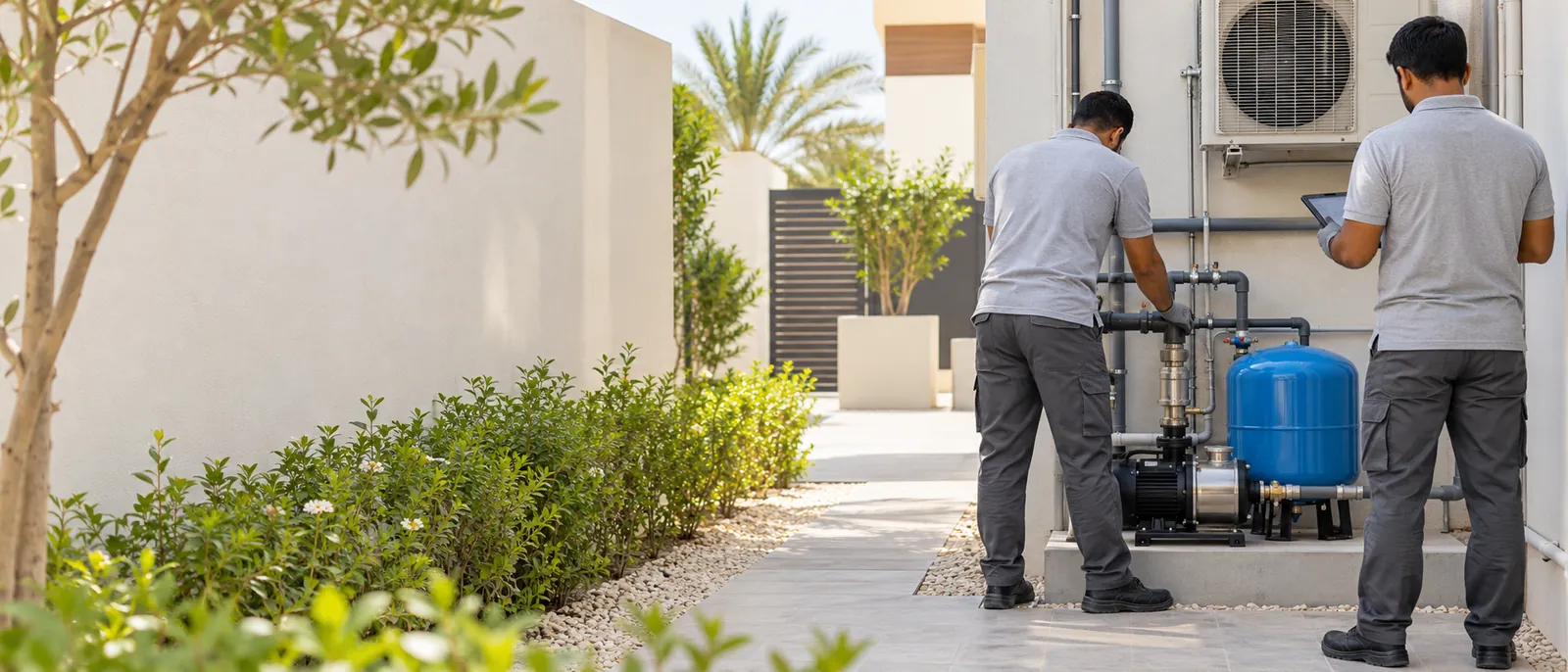
The cost depends on the number and type of pumps, controls such as VFDs, access to the pump room, and any parts needed. We service pumps in Dubai, Abu Dhabi, Sharjah, Ajman, Ras Al Khaimah, Fujairah and Umm Al Quwain. Our office is in Al Khabaisi, Dubai. Prices are confirmed with you before work starts. Visits within Dubai are free; outside Dubai a AED 250 site-visit charge applies, which is fully deducted from the service cost if you go ahead. All visits are scheduled in advance.
Preparing pumps for summer
The weeks before summer are the most useful time for a pump service. Demand rises as temperatures climb, pump rooms heat up, and any weakness in a seal, bearing, capacitor or pressure vessel is more likely to show. A pre-summer service checks the vessel charge, confirms the motor is not overheating or overloaded, tests float switches and dry-run protection, and makes sure the pump room or enclosure is ventilated and shaded.
If you travel during the summer, tell us before you leave. A pump left running against a slow leak in an empty villa can run constantly for weeks, and a failed float switch can empty or overflow a tank without anyone noticing.
Keeping a pump log
For villas with several pumps, and especially for buildings, a simple log makes maintenance far more effective. Recording the cut-in and cut-out pressures, motor current, vessel pre-charge and any faults at each visit shows trends: a current that creeps up, a vessel that loses charge faster than before, or a pump that starts more often each month. These trends often reveal a developing fault months before it causes a breakdown. We record these readings at each visit.
Request a quote for pump maintenance
Tell us what you need and send photos on WhatsApp if you can. Site visits within Dubai are free, and every price is confirmed before work starts.
Frequently asked questions
Why does the pressure vessel need checking?
Its air charge slowly leaks away. Without it, the pump starts every time a tap opens, which wears the pump and switch quickly.
Will water be off during the service?
Briefly, while the pump and vessel are isolated. We keep the interruption as short as possible and tell you before we start.
Can maintenance extend a pump’s life?
Yes. Correct pressures, a charged vessel, clean strainers and early seal replacement all reduce wear on the motor and impeller.
Do you service pumps you did not install?
Yes. We service most common pump types and brands.
What happens if a fault is found?
We explain it and quote the repair before doing any additional work.
How long does a pump service take?
A single villa booster or transfer pump usually takes about an hour. Multi-pump building sets and systems with several tanks take longer.
Do you service submersible and drainage pumps?
Yes. Submersible pumps are lifted where access allows, and their floats, cables and impellers are checked as part of the service.
Related services
For new or replacement pumps, see water pump supply and installation or booster pumps and pressure systems.