A dripping tap wastes water around the clock, a mixer that has gone stiff is hard to use, and a shower that swings from hot to cold is unpleasant and potentially unsafe. Most of these faults come down to a small worn part inside the tap or valve, and can be fixed without replacing the whole fitting, or removing tiles.
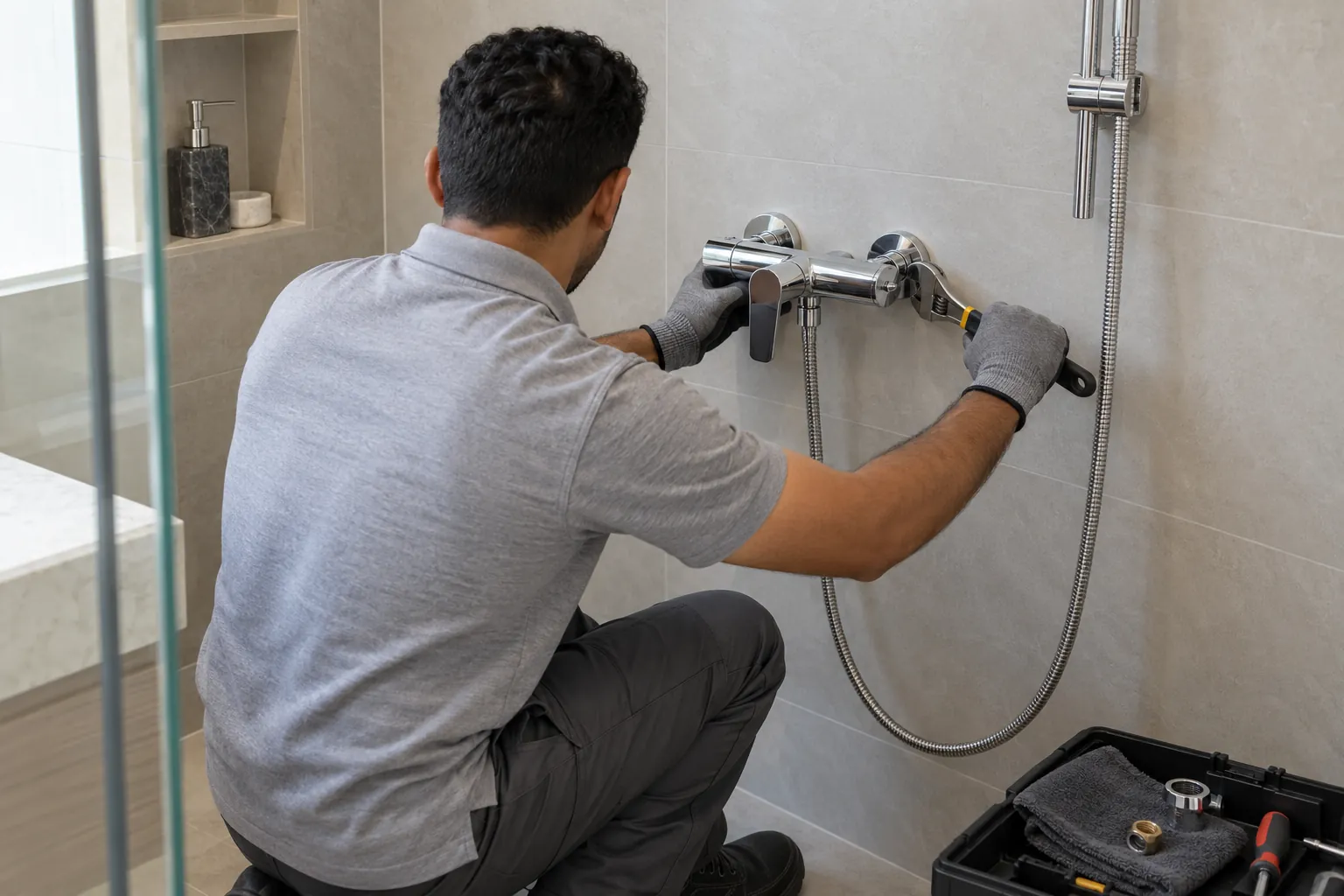
We repair taps, mixers, showers and shower valves in apartments, villas and offices in Dubai and across all seven emirates, and we replace fittings when repair is not worthwhile.
How modern taps and mixers work
Most taps in UAE homes are single-lever mixers with a ceramic disc cartridge inside. Two polished ceramic discs slide over each other to control flow and the mix of hot and cold. Older pillar taps and some traditional mixers use rubber washers that press against a seat.
Showers use either a manual mixer, where you set the temperature yourself, or a thermostatic mixer, which holds a set temperature even when pressure or supply temperature changes. In many bathrooms, the shower valve is concealed in the wall, with only the handles and trim visible.
Knowing which type you have tells us which parts are likely to be needed.
Common tap and mixer problems
Dripping tap
On ceramic disc taps, a drip usually means a worn or scaled cartridge or a failed seal. On washer-type taps, the washer or seat has worn. Replacing the cartridge or washer normally stops the drip.
Stiff, loose or noisy handle
Scale inside the cartridge, a worn cartridge, or a loose retaining screw. A tap that “chatters” or vibrates when used often has a loose part or worn washer.
Leak from the base or under the sink
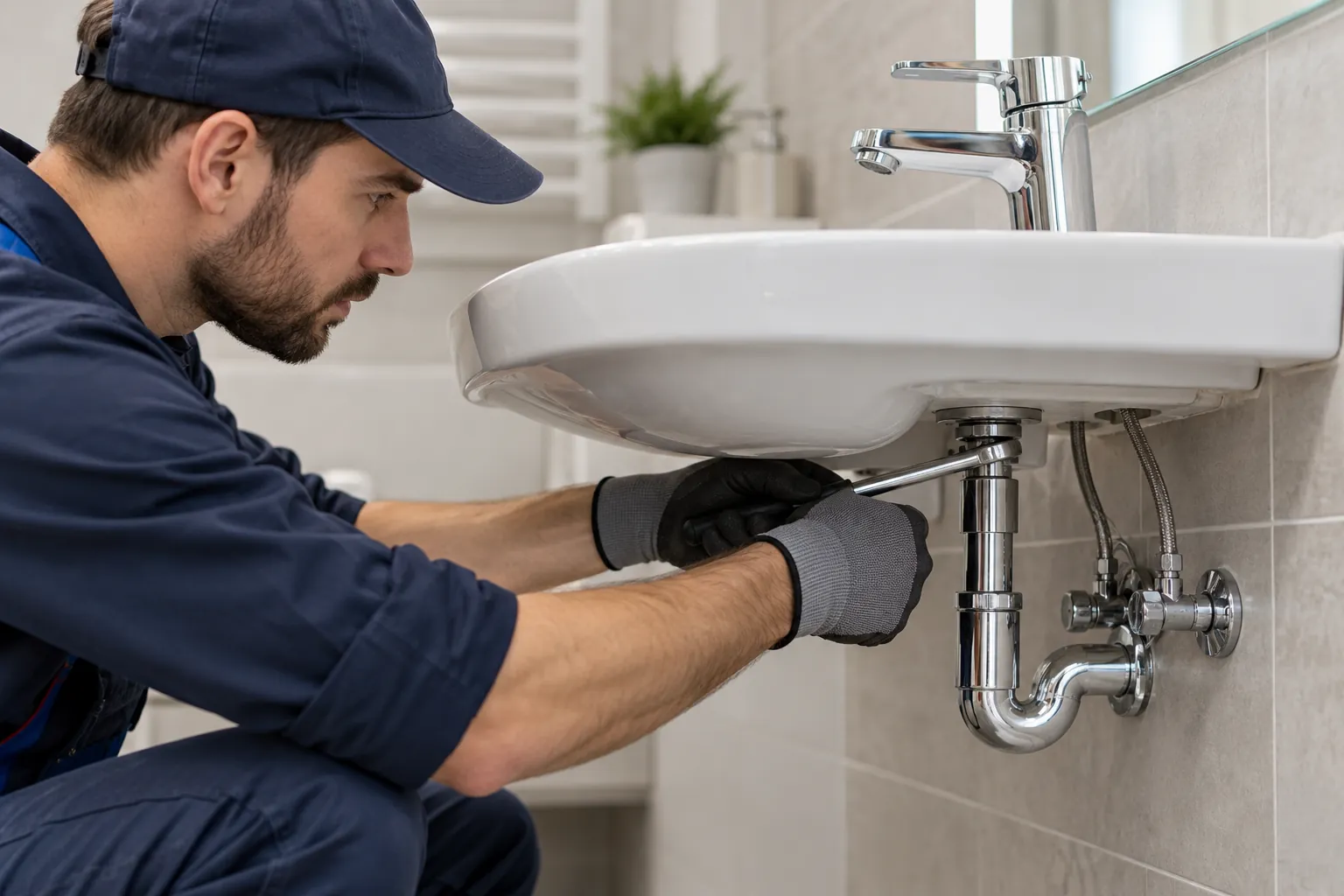
Water around the base of a mixer often comes from worn O-rings on the spout or body. Under the sink, the flexible hoses or the angle valves are the usual source. Old flexible hoses are worth replacing before they fail.
Low flow from one tap
Most often a blocked aerator, the small mesh at the end of the spout, clogged with scale or debris. Cleaning or replacing it usually restores flow. If every tap is weak, the problem is likely supply pressure.
Shower problems
Shower temperature changes suddenly
When someone flushes a toilet or opens another tap, the shower turns hot or cold. A manual mixer cannot compensate for pressure changes; a thermostatic mixer should. If a thermostatic shower is unstable, the thermostatic cartridge may be scaled, worn or need recalibrating, or non-return valves inside the body may be faulty.
Weak shower, especially rainfall showers
Large rainfall heads need a lot of water. Weak flow can come from scale in the head, a blocked filter in the valve body, a partially closed isolation valve, or low supply pressure. In villas, a booster pump is often the real fix for upstairs rainfall showers.
Diverter not switching properly
Showers with a hand shower and an overhead head use a diverter to switch between them. A worn diverter leaks water from both, or will not change over. It can usually be replaced as a cartridge.
Dripping shower head or hand shower
The valve cartridge is not closing fully, or the hose or its washers are worn. Hand shower hoses also split with age.
Concealed shower valves
A concealed valve sits inside the wall, but in most designs, the cartridges that wear out are accessed from the front. Once the handle and trim are removed, the cartridge can be unscrewed and replaced without touching the tiles.
Problems that do need more access are leaks from the valve body or its pipe connections inside the wall. These show up as damp patches on the other side of the wall or below the shower. If you suspect a hidden leak, see leak detection.
Concealed valve parts are brand- and model-specific, so a photo of the handles, trim and any markings helps us find the right parts.
Scale and UAE water
Scale is the main enemy of taps and showers. It roughens ceramic discs, jams thermostatic cartridges, blocks aerators and clogs shower heads. Cleaning heads and aerators regularly helps. If scale returns quickly on every fitting, a water softener protects all of them, along with your water heaters and appliances.
Repair or replace?
A tap or mixer is worth repairing when parts are available and the body is in good condition. Replacement is better when the body is cracked or badly corroded, parts are unavailable, finishes have worn, or you are upgrading the bathroom. For concealed valves, replacing only the cartridge and trim avoids opening the wall where the valve body is still sound. We can fit new fittings you have chosen or advise on suitable options.
How we work, cost and coverage
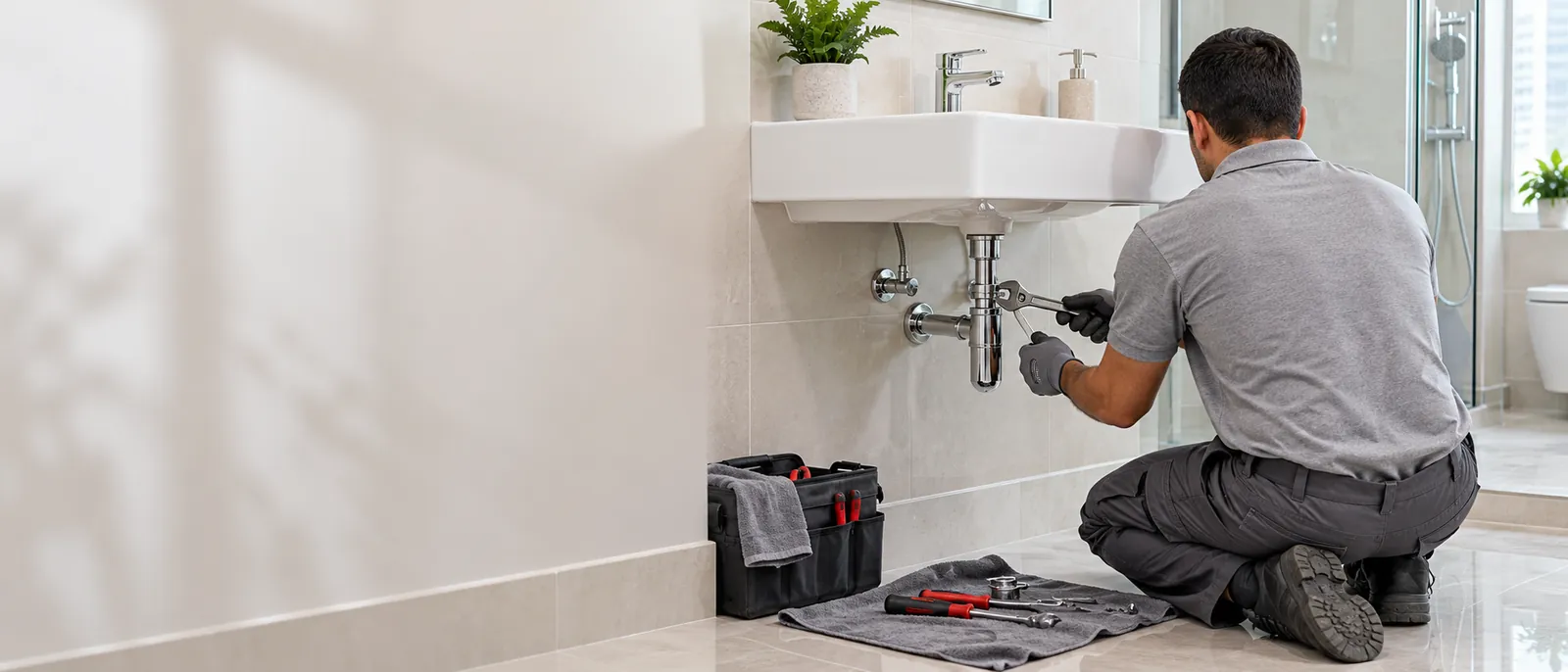
We identify the type of fitting and the worn part, quote before starting, replace the parts, and test for leaks and correct temperature. The cost depends on the fitting type and parts. Concealed thermostatic valves usually take longer than standard taps. We work in Dubai, Abu Dhabi, Sharjah, Ajman, Ras Al Khaimah, Fujairah and Umm Al Quwain. Our office is in Al Khabaisi, Dubai. Visits within Dubai are free; outside Dubai a AED 250 site-visit charge applies, which is fully deducted from the service cost if you go ahead. All visits are scheduled in advance. Diagnosis and service charges depend on the issue and the work needed, and are confirmed with you before any repair starts. Our work carries a 1-month workmanship warranty.
Kitchen taps and appliance connections
Kitchen mixers often have pull-out spray hoses, which wear at the hose and its weight, and can leak inside the cabinet without anyone noticing. Some kitchens also have a separate filtered-water tap connected to an RO system. Washing machines and dishwashers connect through small isolation valves and flexible hoses that are easy to forget until they fail. We repair and replace kitchen mixers, pull-out hoses, filtered-water taps and appliance valves, and we check the hoses under the sink while we are there.
Request a quote for tap and shower repair
Tell us what you need and send photos on WhatsApp if you can. Site visits within Dubai are free, and every price is confirmed before work starts.
Frequently asked questions
Can you repair a designer mixer?
Usually, if the manufacturer’s cartridges are available. A photo of the tap and any markings helps us confirm.
Why is my hot water only lukewarm at the shower?
A thermostatic cartridge set low or scaled, a mixer limit stop, or the water heater itself. If the heater is the problem, see water heater repair.
How do I clean a scaled shower head?
Soak removable heads in a descaling solution or vinegar, then rinse. Many heads have rubber nozzles that you can rub to loosen scale.
My tap still drips after a new washer. Why?
The seat underneath may be worn or scaled. It can sometimes be re-cut, or the tap replaced.
Do I need to turn off the main water for a tap repair?
Usually only the angle valves under the sink. Showers often have isolation valves in the valve body; if not, the bathroom or main supply is isolated briefly.
My pull-out kitchen spray no longer retracts. Can it be fixed?
Usually. The counterweight may have slipped, or the hose may be catching on items in the cabinet. A worn hose can be replaced on most models.
Can low pressure in one shower be fixed without a pump?
Often, yes, if the cause is a scaled head, a blocked valve filter or a partly closed isolation valve. A pump is only needed when supply pressure itself is too low.
Related services
For toilet, cistern and shattaf problems, see toilet repair. For all plumbing work, visit plumbing services.