A toilet that keeps running, flushes weakly or leaks at the base is more than an annoyance. A running cistern can waste a large amount of water every day, a slow leak at the pan can rot flooring and seep into the flat below, and a toilet that will not flush makes a bathroom unusable.
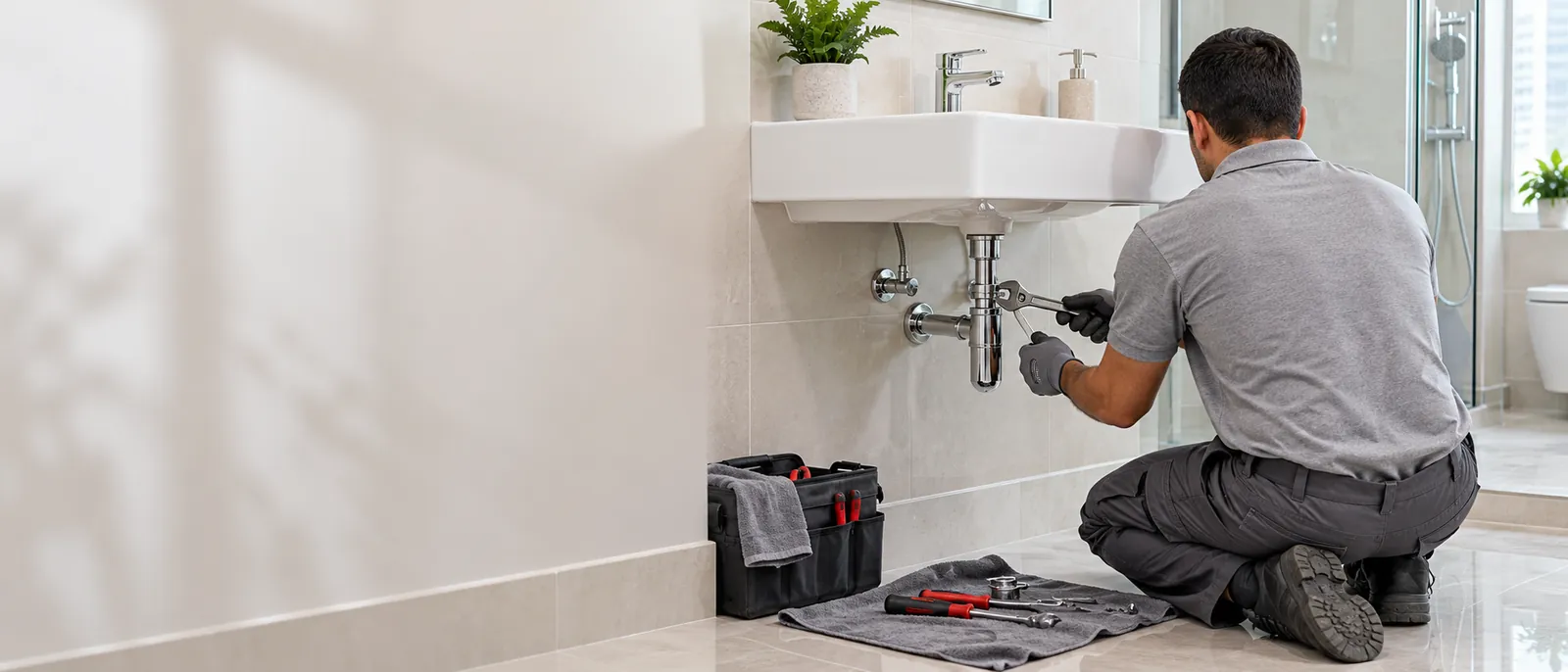
We repair toilets, flush tanks, concealed cisterns and shattaf sprays in apartments, villas and offices in Dubai and across all seven emirates, and we replace toilets when repair is not worthwhile.
Types of toilets in UAE homes
Close-coupled toilets have the cistern sitting directly on the pan. The flush mechanism is easy to reach by lifting the cistern lid.
Wall-hung toilets with concealed cisterns are common in newer apartments and villas. The cistern is hidden inside the wall or a boxed-in frame, and the only visible part is the flush plate. Repairs are made through the flush plate opening.
Floor-standing toilets with concealed cisterns combine a floor-mounted pan with a hidden cistern behind a wall or panel.
Most UAE bathrooms also have a shattaf, a hand-held bidet spray beside the toilet, fed from its own angle valve.
Common toilet problems
Toilet keeps running
Water trickling into the pan after flushing usually means one of two things:
- The flush valve seal is worn or dirty, so water leaks from the cistern into the pan, and the fill valve keeps topping it up
- The fill valve does not shut off, so water rises until it runs down the overflow
Scale and debris are common causes in UAE water. Replacing the seal or the fill valve usually fixes the problem.
Weak or incomplete flush
A weak flush can come from a low water level in the cistern, a flush valve that does not lift fully, a misadjusted dual-flush mechanism, a sticking flush button, or scale blocking the rim holes. If the flush is strong but the water drains slowly, the problem is likely a blockage.
Cistern slow to fill
A partly closed angle valve, a blocked filter in the fill valve, or low water pressure. In villas, check that the booster pump is working.
Water leaking at the base of the toilet
Leaks around the base can come from a failed seal between the pan and the soil pipe, a cracked pan, or condensation on the cistern and pipes. Water that appears only after flushing usually points to the pan connector. If you cannot tell where water is coming from, our leak detection service can trace it.
Leaks from the cistern or connections
Drips from beneath a close-coupled cistern usually come from the seals between cistern and pan, or from the inlet connection. A dripping flexible hose or angle valve is also common.
Toilet blocked
A blockage in the pan or its trap is usually cleared on the spot. If several fixtures drain slowly or the toilet blocks repeatedly, the problem is further down the drain; see drain cleaning. Wet wipes, sanitary products and paper towels are the most common causes.
Concealed cisterns: what is behind the flush plate
With a concealed cistern, the whole mechanism sits inside the wall. Removing the flush plate and, usually, a frame behind it gives access to the fill valve, the flush valve and the isolation valve. Most repairs can be done through this opening without breaking tiles.
Common concealed cistern faults include:
- Continuous running from a worn flush valve seal or a faulty fill valve
- Flush plate buttons that stick, do not return, or no longer trigger the flush, often because of a broken actuator or misadjusted rods
- Leaks inside the wall, which may show as damp tiles or staining below the toilet
Concealed cistern parts are brand-specific, so a photo of the flush plate and any visible markings helps us bring the right parts.
Shattaf (bidet spray) repairs
Shattafs are used many times a day, so they wear. Typical faults are:
- a dripping spray head that will not shut off completely
- a leaking or split hose, often at the connection to the angle valve
- a corroded or stiff angle valve
- low pressure from scale in the spray head
A shattaf left under pressure with a worn hose can burst, so it is good practice to close the angle valve when not in use for long periods. Replacement heads, hoses and valves are quick to fit.
How we repair toilets
- Diagnosis. We identify the faulty part: seal, valve, flush mechanism, pan connector or drain.
- Quote. You are told the repair and cost before we start.
- Repair. Worn parts are replaced, and mechanisms adjusted for a full, efficient flush.
- Testing. We flush several times, check for leaks and confirm the cistern refills and shuts off correctly.
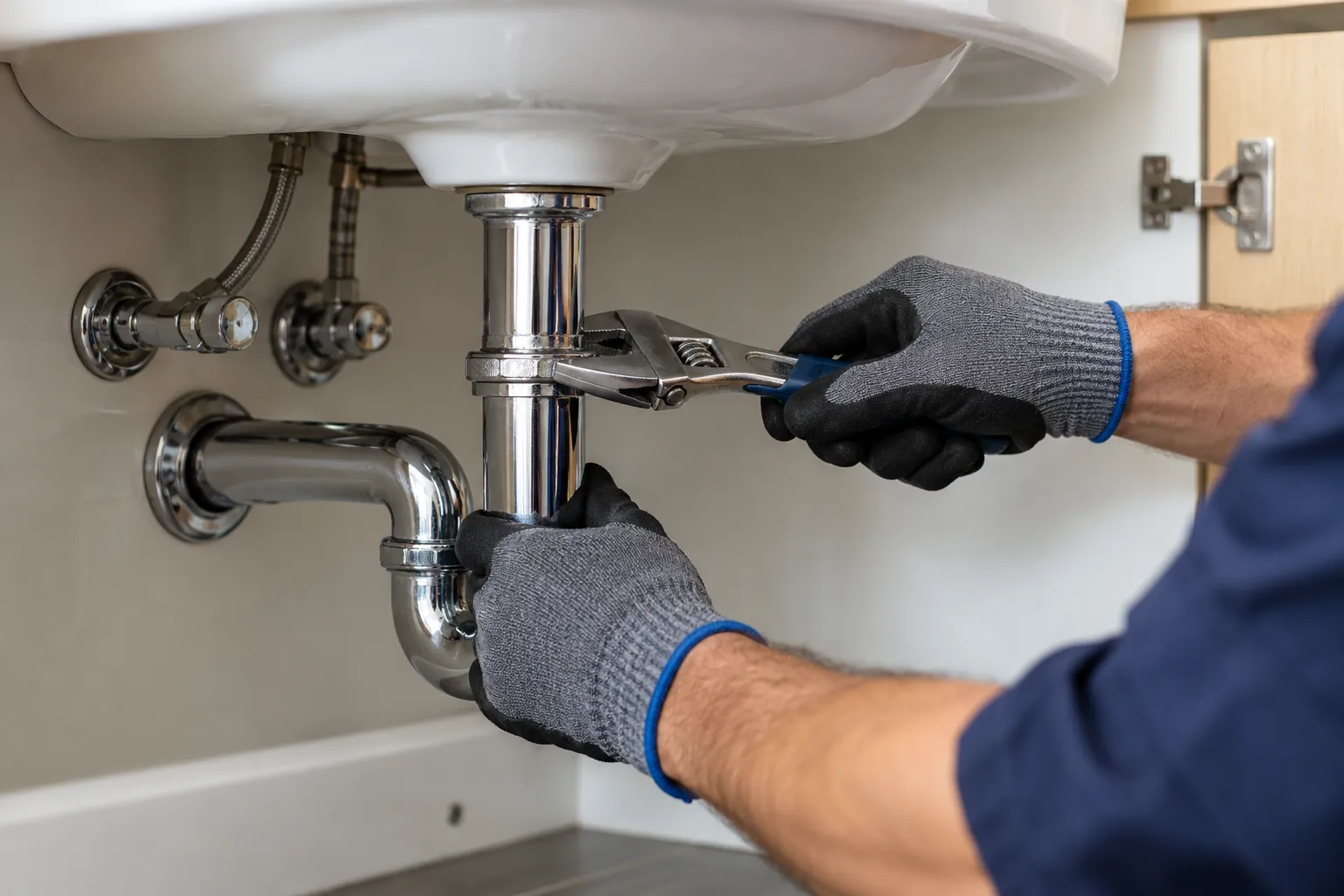
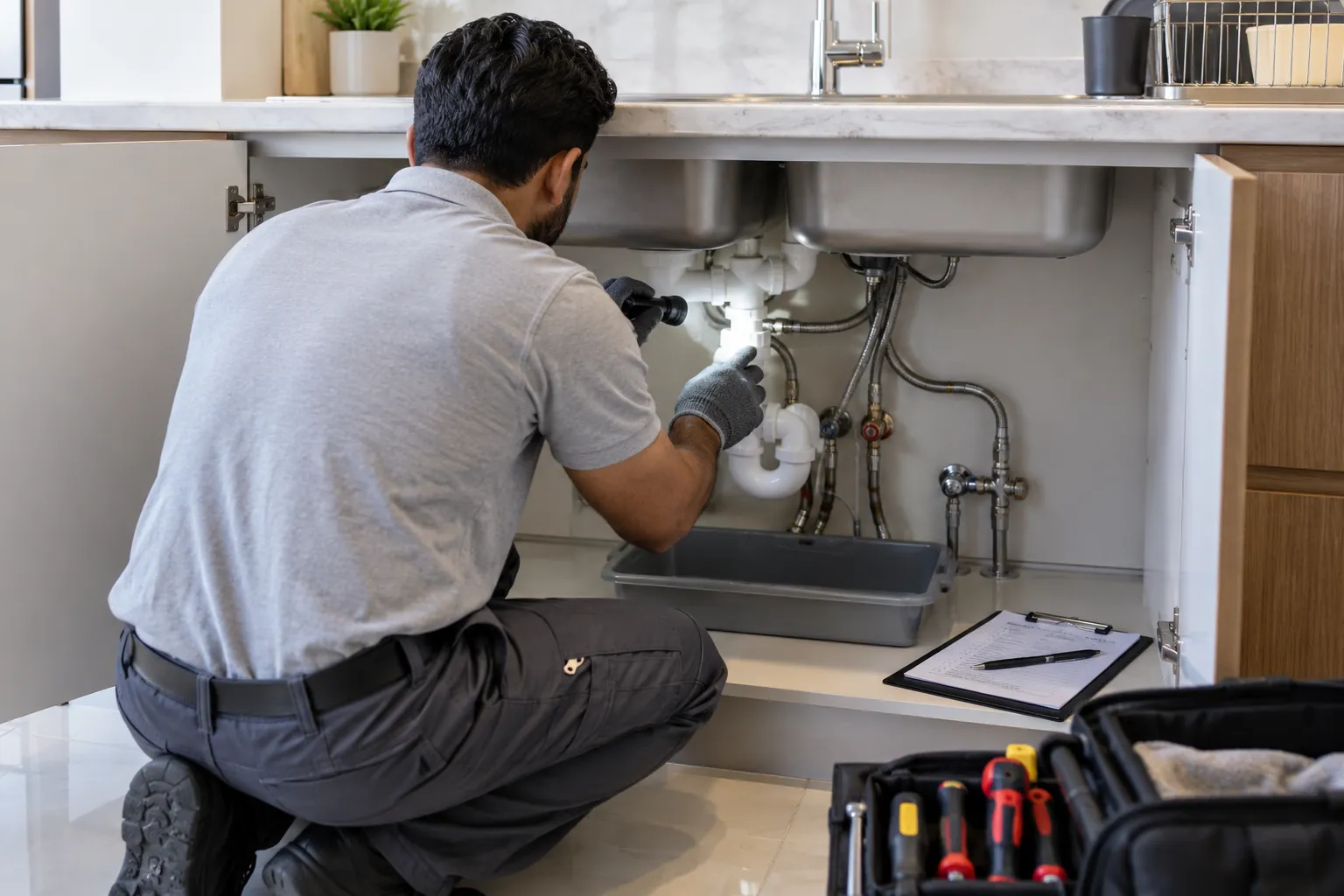
Diagnosis and service charges depend on the issue and the work needed, and are confirmed with you before any repair starts. Our work carries a 1-month workmanship warranty.
Repair or replace the toilet?
Most toilet problems are fixed by replacing inexpensive parts. Replacement makes more sense when the pan or cistern is cracked, parts are no longer available for an old concealed cistern, the toilet is part of a bathroom upgrade, or you want a water-saving dual-flush model. We can supply and fit a new toilet or fit one you have bought.
Cost and coverage
The cost depends on the fault, the parts needed, and the type of toilet; concealed cisterns usually take longer than close-coupled ones. We repair toilets in Dubai, Abu Dhabi, Sharjah, Ajman, Ras Al Khaimah, Fujairah and Umm Al Quwain. Our office is in Al Khabaisi, Dubai. Visits within Dubai are free; outside Dubai a AED 250 site-visit charge applies, which is fully deducted from the service cost if you go ahead. All visits are scheduled in advance.
Reducing water use
Toilets account for a large share of household water use, and small changes help:
- Fix silent leaks. A flush valve that seeps into the pan can waste more water than the household flushes.
- Use dual flush correctly. The smaller button is designed for most flushes.
- Adjust the fill level. Many cisterns can be set to use slightly less water without affecting the flush, within the manufacturer’s limits.
- Upgrade old single-flush cisterns. Replacing the internal mechanism with a dual-flush valve is often possible without replacing the toilet.
Request a quote for toilet repair
Tell us what you need and send photos on WhatsApp if you can. Site visits within Dubai are free, and every price is confirmed before work starts.
Frequently asked questions
How can I tell if my toilet is leaking silently?
Add a few drops of food colouring to the cistern and wait without flushing. If colour appears in the pan, the flush valve is leaking.
Can I stop a running concealed cistern myself?
You can usually close its isolation valve behind the flush plate to stop the water until it is repaired. The plate typically lifts or clips off.
Why does my toilet flush twice or keep refilling?
The flush valve seal is probably leaking, so the cistern loses water and the fill valve keeps topping it up.
Is a leak at the base serious?
Yes, if it is from the pan connector. Waste water is escaping, and it can damage the floor and the ceiling below.
Do you replace flush plates?
Yes, where a compatible plate is available for the cistern model.
Can a wall-hung toilet be moved or raised?
The height and position are set by the concealed frame inside the wall. Changing them means opening the wall, so it is usually done as part of a bathroom renovation.
Why does my toilet make a noise long after flushing?
A fill valve that closes slowly or vibrates as it shuts, often because of scale or high pressure. Replacing or adjusting the valve usually quietens it.
Related services
For mixers, showers and taps, see tap and shower repair. For all plumbing work, visit plumbing services.